
Why Moving to the Bay Area Requires More Than a Packing Checklist
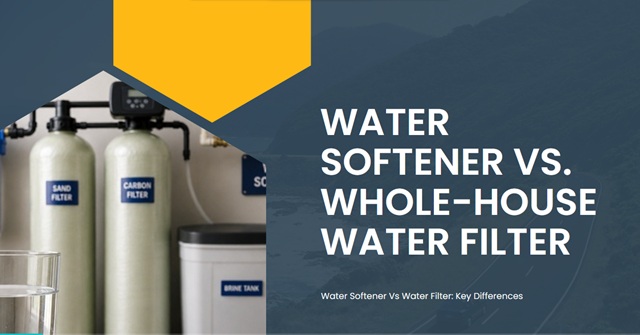
Water Softener Vs Water Filter: Key Differences
A water softener is designed for one specific job: removing hardness minerals such as calcium and magnesium. Those minerals create scale, water spots, soap scum, and buildup inside water heaters and appliances.
In practical terms, the water softener vs water filter decision starts with whether the priority is hardness removal or treatment of specific substances.
A whole-house water filter treats the substances its filter media was selected to handle. These may include sediment, chlorine, iron, manganese, sulfur odors, or certain organic chemicals. "Whole-house filter" does not describe one universal treatment method. Its capabilities depend on the media, design, flow rate, and certifications of the specific system.
A water conditioner is a broader term that may describe scale-control equipment, including salt-free systems that do not remove hardness minerals.
That distinction is also useful when comparing water softener vs filter options, because scale control is not the same as removing contaminants.
 Water Softener Vs Filter: How Does A Softener Work?
A conventional water softener contains resin beads charged with sodium or potassium ions. As hard water passes through the resin, calcium and magnesium attach to the beads. The resin releases a small amount of sodium or potassium into the water in exchange.
In a water filter vs softener comparison, this ion-exchange process is the defining feature of the softener.
Once the resin reaches capacity, the softener starts a regeneration cycle. A concentrated brine solution removes the accumulated hardness minerals from the resin and sends them to the drain. The recharged resin can then continue softening the household water.
Homeowners usually notice the surface-level improvements first: fewer spots on dishes, better soap lather, softer laundry, and less scale around faucets. Some of the most valuable results occur out of sight. Hard-water scale can collect on water-heater elements, restrict plumbing fixtures, and reduce the working life of dishwashers, washing machines, and other water-using equipment.
Softener sizing should account for water hardness, household water use, peak flow demand, and any iron or manganese the unit is expected to treat. A softener must be programmed for the home’s measured hardness and water use. A system that regenerates based on actual water consumption usually uses salt and water more efficiently than a timer-only model.
We frequently find that poor results come from incorrect settings, an undersized unit, an empty salt tank, or a bypass valve left partly open. Equipment size alone does not guarantee performance; setup and maintenance matter just as much.
Water Filter Vs Softener: What Does A Whole-House Filter Remove?
A whole-house filter is installed where the main water line enters the home. Water passes through the treatment system before reaching showers, faucets, toilets, and appliances. The system may use a replaceable cartridge, a large media tank, oxidation, ultraviolet light, or several treatment stages.
For homeowners researching water softener vs water filter systems, the treatment media and target substances are more important than the equipment label alone.
The term "whole-house filter" describes where the system works. The media determines what it removes. Sediment cartridges capture sand, silt, rust flakes, and other particles. Activated carbon reduces chlorine, unwanted tastes, odors, and certain organic compounds. Catalytic carbon can treat chloramine and selected compounds that standard carbon handles less efficiently. Iron and manganese filters use oxidation and specialized media to capture dissolved metals. Ultraviolet systems inactivate microorganisms after sediment and cloudiness have been properly controlled. Specialty media can target contaminants such as arsenic, nitrate, fluoride, or PFAS when the system is designed and certified for that purpose. Whole-house reverse-osmosis systems can reduce a broad range of dissolved substances, although they require significant space, pretreatment, storage, and wastewater management.
Every filter has defined limits. A carbon system designed for chlorine reduction should not be assumed to remove bacteria, hardness, nitrate, or dissolved metals. One filter rarely handles every water-quality concern.
This is why a water softener vs filter comparison should be tied to measured water conditions rather than broad product claims.
Does A Water Softener Filter Water
A water softener removes hardness minerals through ion exchange. It may also handle a limited amount of dissolved iron when the water chemistry and manufacturer’s specifications allow it. Visible particles can foul the resin, which is why homes with sediment often need a prefilter.
In a water filter vs softener evaluation, neither system should be credited with treatment functions it was not designed to perform.
Sediment, chlorine, bacteria, pesticides, nitrate, PFAS, and many other contaminants require separate treatment. A softener can make water look and feel better without establishing that the water is free of health-related contaminants.
This distinction becomes especially important with private wells. Clear water can still contain bacteria, nitrate, arsenic, or other substances that have no obvious taste, color, or odor. Laboratory testing should guide any safety-related treatment decision.
Water Softener And Filter: Do You Need Both?
Start by testing untreated water from a location ahead of any existing equipment. Testing water after an old filter or softener can hide the original conditions and lead to inaccurate equipment sizing. Appearance, taste, and odor offer useful clues, though they cannot identify every contaminant or confirm that water is safe.
Municipal water and private wells have different treatment concerns. Private-well owners should use an accredited laboratory and repeat safety testing on an appropriate schedule. Municipal-water customers can review their utility’s annual water-quality report and test the water at the tap when plumbing-related contaminants such as lead are a concern.
A laboratory report commonly expresses hardness in grains per gallon or milligrams per liter as calcium carbonate. Test for substances relevant to the water source and local conditions, such as iron, manganese, nitrate, arsenic, bacteria, sulfur, lead, chlorine, or PFAS. Scale suggests hardness; orange staining may indicate iron; black staining may indicate manganese; rotten-egg odor often points to hydrogen sulfide or water-heater conditions.
A softener is appropriate when hardness is the main concern. A filter is appropriate when testing identifies sediment, disinfectants, odors, metals, microorganisms, or other target contaminants. Homes with both hardness and contaminants may need a coordinated multi-stage system. Some problems affect the entire house. Others require treatment only at a drinking-water tap.
A properly planned water softener and filter system assigns each stage a specific treatment goal based on those test results.
A good evaluation also checks water pressure, peak household flow, plumbing size, available drain access, and well-pump capacity. Whole-house equipment must treat enough water for simultaneous showers, appliances, and fixtures without a noticeable pressure drop. A system can treat a laboratory sample successfully and still disappoint the household if it restricts flow during showers, laundry, and dishwasher use.
For homes that need both types of treatment, a water softener and filter system should also be sized for the combined effect on flow and pressure.
Do I Need Both Water Softener And Iron Filter
The answer depends on the amount and form of iron in the water. Water that leaves the faucet clear and later turns orange often contains dissolved ferrous iron. Water that is already rusty or carries particles contains oxidized ferric iron. Slimy deposits may indicate iron bacteria. Each condition calls for a different treatment approach.
In this setting, the water filter vs softener choice depends heavily on iron concentration, form, and the equipment manufacturer’s limits.
A small amount of clear-water iron can sometimes be treated by a properly sized softener. The acceptable amount depends on the softener, the water’s pH, and the presence of manganese or other conditions that affect resin performance. Sending too much iron through a softener can coat the resin, increase salt use, create recurring stains, and shorten service life.
A dedicated iron filter is usually the better choice when staining is heavy, iron levels exceed the softener’s rating, particles are already visible, or the water contains iron bacteria. Hydrogen sulfide or manganese may also require treatment.
Treatment order matters. A typical well-water design places sediment removal and an iron oxidation/filter stage ahead of the softener. Iron bacteria may require disinfection and ongoing well maintenance.
An installer should test iron, manganese, pH, and hydrogen sulfide and confirm the well’s available flow rate. Backwashing iron filters need enough water to clean their media properly. A filter installed on a low-producing well may perform poorly even when the treatment chemistry is correct.
Does Water Filter Remove Salt From Softener
Most standard whole-house filters do not remove the sodium added during softening. Sediment filters and activated-carbon filters are not designed to capture dissolved sodium ions. Sodium passes through these filters along with the water.
This detail can affect a water softener vs water filter decision when sodium in drinking water is a concern.
Removing sodium requires a membrane or distillation process. Point-of-use reverse osmosis is the most practical option for reducing sodium in drinking and cooking water. It is commonly installed under the kitchen sink and paired with a separate faucet. Feeding softened water to the reverse-osmosis unit can also help protect its membrane from hardness scale. Distillation and certain specialized deionization systems can also reduce sodium.
The amount of sodium added during softening depends on the original hardness of the water. People who follow a medically directed sodium restriction should review their water test with a healthcare professional and consider reverse osmosis, potassium chloride regeneration, or a separate drinking-water arrangement.
A salt-free scale-control system avoids adding sodium because it does not exchange hardness minerals. The calcium and magnesium remain in the water, so the system does not produce truly softened water.
Water Softener And Filter System: Cost, Maintenance, And Installation
Choose equipment from the water test backward. Each component should address a measured problem and support the household’s actual flow requirements.
A complete water softener and filter system should therefore be selected as a coordinated treatment train rather than as unrelated pieces of equipment.
Water chemistry, including hardness, iron, manganese, pH, sediment, disinfectant type, microorganisms, and other contaminants, influences equipment selection. Treatment sequence is also important: sediment, iron, carbon, softening, ultraviolet treatment, and point-of-use reverse osmosis must be arranged according to the water chemistry and equipment requirements. Chlorine or chloramine may affect filter choice and resin life. Removing disinfectant from all household water also eliminates its residual protection inside the home’s plumbing, making proper system maintenance important.
Look for specific contaminant-reduction claims and relevant third-party certifications, such as NSF/ANSI standards. A general "purifies water" claim provides little useful sizing or performance information. Confirm service flow rate, pressure loss, media capacity, softener grain capacity, and expected regeneration or replacement frequency. Demand-initiated regeneration, adjustable settings, and accurate sizing can reduce operating waste.
The most dependable proposal includes the original laboratory results, the treatment goal for each component, the system’s continuous and peak flow ratings, expected pressure loss, softener capacity and regeneration settings, filter replacement or media-service intervals, salt, water, electricity, and cartridge requirements, drain, electrical, and plumbing modifications, warranty terms for tanks, valves, electronics, media, labor, and shipping, annual operating needs, and a clear installed price. Confirm that replacement parts and qualified service are locally available. This information makes competing systems much easier to evaluate.
Installation details have a direct effect on everyday use. Check available floor area, ceiling height, drain access, electrical outlets, bypass-valve clearance, and room for future service. Backwashing systems and softeners need an approved drain connection. Local rules may restrict discharge into septic systems or certain drains. Ultraviolet equipment needs reliable power and properly pretreated water. Outdoor installations may need protection from freezing, heat, sunlight, and moisture.
It is also helpful to include a bypass valve, untreated-water sampling point, pressure gauges, and shutoff access. These small details make future testing and service faster and can prevent unnecessary disruption to the household.
Determine who will add salt, replace cartridges, clean injectors, sanitize equipment, test treated water, and arrange media replacement. Test the treated water to verify that the system performs as intended. Safety-related contaminants require monitoring at intervals appropriate to the source and treatment method.
The lowest equipment price does not show the full cost of ownership. Include the equipment, plumbing modifications, permits, professional installation, salt, filter cartridges, replacement media, electricity, testing, wastewater, and service visits. Frequent cartridges, excessive regeneration, proprietary replacement parts, service-call charges, and shortened media life can add considerably to the long-term expense. A clear proposal gives the homeowner the expected maintenance schedule and operating costs before installation.
When weighing water softener vs filter proposals, compare these long-term requirements alongside the initial installed price.