Sound as a Source of Story
Music often shapes the way stories take form. A melody can guide mood and structure. Writers often draw from sound patterns to build narrative flow. Silence between notes can suggest tension or calm. This connection builds a bridge between hearing and reading. Sound deeply shapes written imagination form.
Many creative archives and digital spaces offer access to inspiration. Some writers explore lyrics and sound archives alongside text collections and free books as part of their research process. This mix of materials helps build new associations between rhythm and language.
Rhythm in Written Form
Writing and music share a sense of timing. Sentences can rise and fall like chords. A strong line break can act like a rest in a song. This pattern creates emotional depth. Many authors study tempo in speech and apply it to narrative pacing.
The rhythm of language can guide attention. Short sentences can create impact. Longer sentences can build atmosphere and tone. The balance between these forms shapes the reading experience. Music theory often inspires this balance in written work.
Shared Creative Spaces
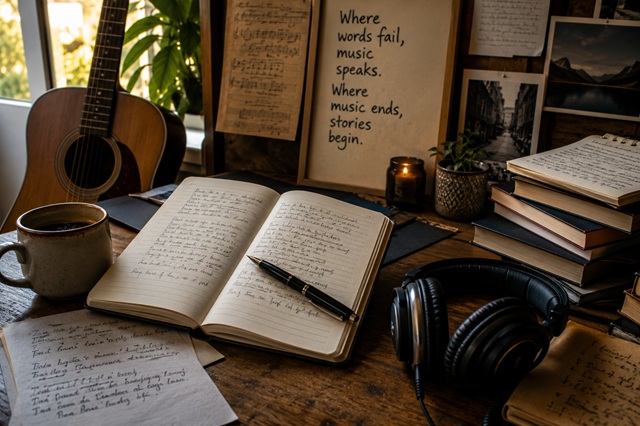
Music studios and writing rooms often share similar energy. Both rely on focus and quiet concentration. Ideas move between sound and text in subtle ways. A single chord can suggest a full scene.
Some creative methods bring music and writing together in practice:
The Pulse of Improvisation
Music improvisation often shapes narrative instinct. Spontaneous sound patterns help form unexpected story paths. Writers observe how live performance changes direction without plan. This approach supports flexible thinking. It builds confidence in uncertainty. Creative flow becomes central. Ideas appear in motion rather than fixed structure. The result is writing that feels alive and responsive. It mirrors performance energy in written form. Spontaneous creation reflects the rhythm of live art. This connection helps shape new narrative paths with ease. It supports freedom in expression.
Sound Mapping in Narrative
Sound mapping links moments in music to scenes in writing. Each tone can suggest place and emotion. Writers translate sonic changes into shifts in setting. This process builds depth without complex structure. It allows simple language to carry strong meaning. The method helps align feeling with form. It keeps attention steady and clear. Narrative flow becomes guided by auditory imagination. It also supports flexible interpretation of story moments. Weak boundaries between sound and text create new insight. This method evolves naturally.
Silence as Creative Space
Silence plays an active role in both music and writing. It creates pause and reflection. In music silence shapes rhythm. In writing it shapes thought. Empty space allows ideas to breathe. It helps structure emerge without force. This balance supports clarity and focus. Creative work gains strength from absence as much as sound. Silence becomes part of expression rather than lack. It also defines pacing in both arts. Weak pauses guide attention naturally. It shapes unseen structure. This creates space for reflection.
These shared methods show how sound and text can merge into one creative field.
Shared Inspiration Loops
Music and writing often feed each other in cycles. A sound can trigger a memory that becomes a scene. A line of text can suggest a melody. This exchange builds a continuous loop of ideas. It supports long term creative growth.
Both art forms rely on structure and feeling. Patterns guide form while emotion guides direction. This balance creates works that feel both planned and natural. The link between sound and story remains strong across time and style.
Tags:
Image Credits: Freepik